Showing posts with label Animal. Show all posts

Wednesday, February 11, 2009

Snake's Toxic Rank 8

Multibanded Krait is the world's No.8 venomous snake.
Snake's Characteristics: Multibanded Krait is most active at night. Its venom is a very strong neurotoxin. Its victims are usually fishermen who untangle these deadly snakes from large fish nets.

Snake's Habitat: Multibanded Kraits are often found in aquatic areas hunting for fish, frogs or other snakes.

Snake's Length: Multibanded Krait's average length is in range of 1.8 meters.

Snake's Distribution: Multibanded Kraits now rare in wild, are most preferred edible snakes in China.

Continue reading....

Tuesday, February 10, 2009

Snake's Toxic Rank 9

Tiger Snake is the world's No.9 venomous snake.

Snake's Description:
Tiger Snake are olive to dark brown in colour above with yellowish or olive belly and crossbands. Its subspecies in Tasmania and Victoria are uniformly black.


Snake's Characteristics: Tiger Snake is a dangerous poisonous snake found in Australia. It is very common and bites many humans in Australia. It has a very potent neurotoxic venom that attacks the nervous system. When aroused, it is aggressive and attacks any intruder. It flattens its neck making a narrow band. Its venom is produced in large quantities, with an average yield 35mg and a record of 180mg.

Snake's Habitat: Tiger Snakes have many habitats from arid regions to human settlements and along waterways to grasslands.

Snake's Length: Tiger Snake has an average length of 1.2 meters and maximum of 1.8 meters.

Snake's Distribution: Tiger Snakes are found in Australia, Tasmania, Bass Strait islands and New Guinea.

Continue reading....

Monday, February 9, 2009

Worlds Top 10 Most Poisonous Venomous Deadliest Snakes


Snake's Toxic Rank 10:
Jarararcussu is the world's No.10 venomous snake


Snake's Description:
Jarararcussu(
Bothrops Jarararcussu) has a light or dark greenish colour on upper body and faint yellow colour at bottom.

Snake's Characteristics:

Jarararcussu may inject a whopping 800 mg of venom per bite. Its single bite has the potential to kill 32 people.

Snake's Habitat:

Jarararcussus are often found in a spiral state hanging on trees.

Snake's Length:

Jarararcussu can grow up to 3 meters in length.

Snake's Distribution:

Jarararcussus are found in Argentina, Bolivia, Brazil and Paraguay


Continue reading....

Friday, February 6, 2009

10 Most Disturbing Animals on Earth

1.Gumprecht's Green Pit Viper

This striking bright green snake, commonly known as Gumprecht's green pit viper, is found in the Southeast Asian region of Greater Mekong.

The serpent, which has the formal name Trimeresurus gumprechti, was first described by scientists in 2002, although he doesn't look like he appreciates having been discovered.

Photobucket

2.Snakefish

Photobucket
In 2002, the snakefish (or Channidae) was described as “something from a bad horror movie” by US Interior Secretary Gale Norton. Some describe snakefish as having ”a voracious appetite, often consuming all other fish in a lake or pond and even eating its young. It can slither across land, staying out of water for up to three days, to find new sources of food.” Norton also warns that once on land ”snakeheads can eat almost any small animal in its path…. They have even attacked people in China who got too close to snakeheads’ egg nesting areas.” According to Wikipedia, snakefish can be up to over a metre in length and over 6 kilograms in weight. Most snakefish are 2-3 feet long. They’re also fast reproducers with no natural enemies outside of their native environments. Within their native environments, small snakefish are preyed upon by bigger fish, while full-grown snakefish are consumed by crocodiles and alligators. Because of their ability to move into new habitats and wipe out local ecosystems (and to then hop out of the water and mosey on over to another body of water and repeat the process) snakefish have been prohibited in 13 American states and other countries (e.g., Australia).

continue reading Continue reading....

Thursday, February 5, 2009

World´s Most Deadliest Creatures

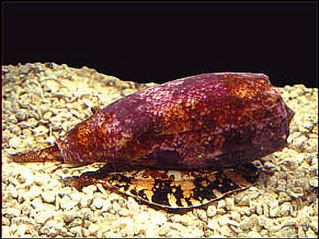
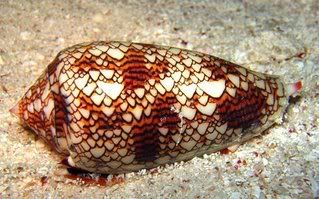
1. The Cone Snail: Can kill you in less than 4 minutes
Say, for instance, you happen to be happily walking through the low surf merrily picking up and discarding shells, looking for just the right one to decorate your desk back at the office.

With no warning at all, however, you feel a sharp sting from one of those pretty shells -- a sting that quickly flares into a crawling agony. With that quick sting, the cone snail´s barbed spear has insidiously injected you with one of the most potent neurotoxins in existence.
Photobucket

Photobucket

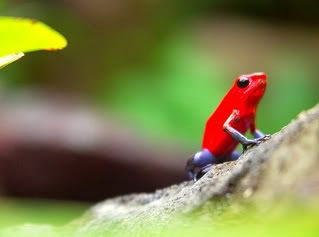
2.Poison Arrow Frog :Lethal Touch
Photobucket

That frog over there, for instance: that tiny, brilliantly colored tree frog. Doesn't he look like some kind of Faberge ornament, there against that vermilion leaf? Wouldn't such a natural jewel look just gorgeous in a terrarium back home?
Photobucket

Pick him and you'll be dead in a matter of minutes. One second frolicking in the undergrowth, the next spasming and foaming on the jungle floor. No stinger, no bite, no venom: just the shimmering slime covering his brilliant body.

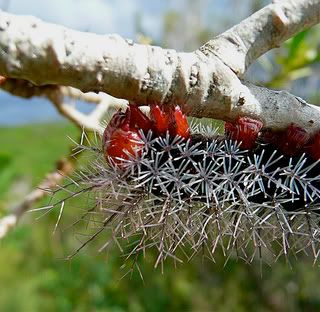
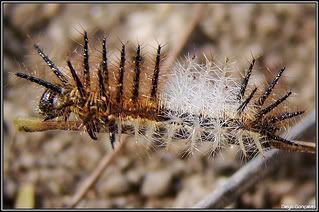
3.The Lazy Clown of the Insect World
Photobucket

Photobucket

The adult moth is just a moth, but the hairs of the caterpillar are juicy with nasty stuff, so nasty that dozens of people die every year from just touching them. By the way, it´s not a good way to go, either: their venom is a extremely powerful anticoagulant, death happening as the blood itself breaks down. Not fun. Very not fun.

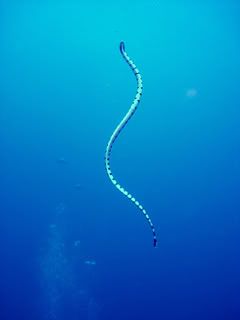
4. Beaked Sea Snake
Another creature of nightmares that doesn´t come with a theme song is a strange import to the world aquatica. When you think snake you usually think of dry land. But if you go paddling around the Persian Gulf (or coastal islands of India) keep a wary eye out for the gently undulating wave of insatiable dreams.
Photobucket

Photobucket

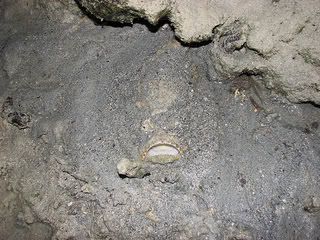
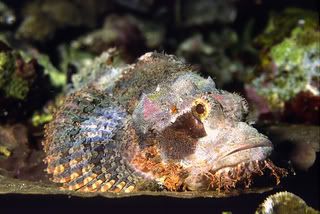
5. Stone Fish
Waits for you to step on itBut it´s not time to leave the sea quite yet. There are two nasty things in the blue depths you should spend many a sleepless night frightened of. For the big one you´ll have to wait a bit, for the one right below it in terrifying lethality you just have to watch your step when you´re walking along the bottom of the ocean.
Photobucket

Photobucket

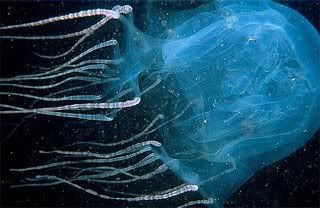
6. Box Jellyfish should really be called the "coffin" jellyfish

Chironex fleckeri: A tiny jellyfish found off the coast of Australia and southeastern Asia. Only about sixteen inches long, it has four eye-clusters with twenty-four eyes, its tentacles carry thousands of nematocysts, microscopic stingers activated not by ill-will but by a simple brush against shell, or skin. Do this and they fire, injecting anyone and anything with the most powerful neurotoxin known.
Photobucket

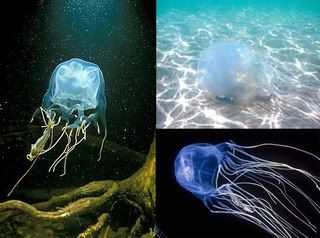
As you can see on the top left of the image (below), it's pretty hard to notice Chironex Fleckeri in the wild:
Photobucket Continue reading....
 

2Day & 2Morrow | Design by iBloGraphics
brought to you by : allblogtools.com Blogger Templates